
Beginnings Ask Truth-Telling
This story needs only a very brief introduction. I hope to stand aside afterward and let the story speak to you in whatever way it chooses to.
The Hare Under the Hill was born out of a moment of beginnings. I was serving as Guide at the Center for Wild Spirituality, and a group of individuals was joining my Council. A Council space can be many things, and I knew the group would end up deciding what our time together would look and feel like. But, like any good pilgrimage, someone needs to open the door and invite others onto the path. This story was a way into the journey and to share that when we set out together on a journey, truth is required. First, the story. Then, a short reflection.
The Hare Under the Hill
By Nathan Schultz
Long ago, near the edge of a forest, and on the banks of a river, stood a village. The people in this village knew how to listen, and they listened well. They tilted their ears to the voices in the stones. They heard the whisper of the trees holding fast to the earth, and the rushing breath of the river as it waved in its passing. The people knew that the speaking voices were a kind of prayer.
But over time, the listening slipped. One generation grew too busy to listen and abandoned the quiet places. The next generation grew too certain of its knowledge to listen. And the next generation grew too afraid to listen, thinking the ancestors foolish and full of superstition. The people still planted their crops, raised their children, and sang their songs, but the old practice of listening, of stillness, fell away. And the children grew up not knowing what had been lost.
For a while, life went on well enough. Yet as the years turned, the sweetness slowly evaporated from the village. The harvested grain filled their bellies but tasted thin. They raised their voices in song, and found the songs held little meaning. The nights became dark as they always had, yet the stars seemed farther away. And though they could not name it, the villagers began to feel a hollow ache. A feeling that the world was distant and no longer their home.
So, they went to the old woman who lived at the edge of the woods. She always kept a kettle full of meager soup for all who asked, and a warm hearth for passersby. Her hair smelled of cedar smoke and her hands of earth, as though the wild itself had marked her. Sometimes she would pause mid-conversation, tilting her head as if listening to something deep underground. The villagers never understood her, but they knew she carried an old remembering in her bones. So, when their worry became sharp, and the world no longer felt welcome, they sought her counsel.
They asked, “Why does it feel so silent?”
She said, “The land has not stopped speaking. It never will. But you have forgotten how to hear it. And when the people forget to listen, there is only one medicine: to speak your truth into the world. The kind of story that can awaken. The kind that is carried in the bones. The ones you don’t know you know until they fall out of your mouth. Not facts, but truths.”
“How will we do this?” they asked.
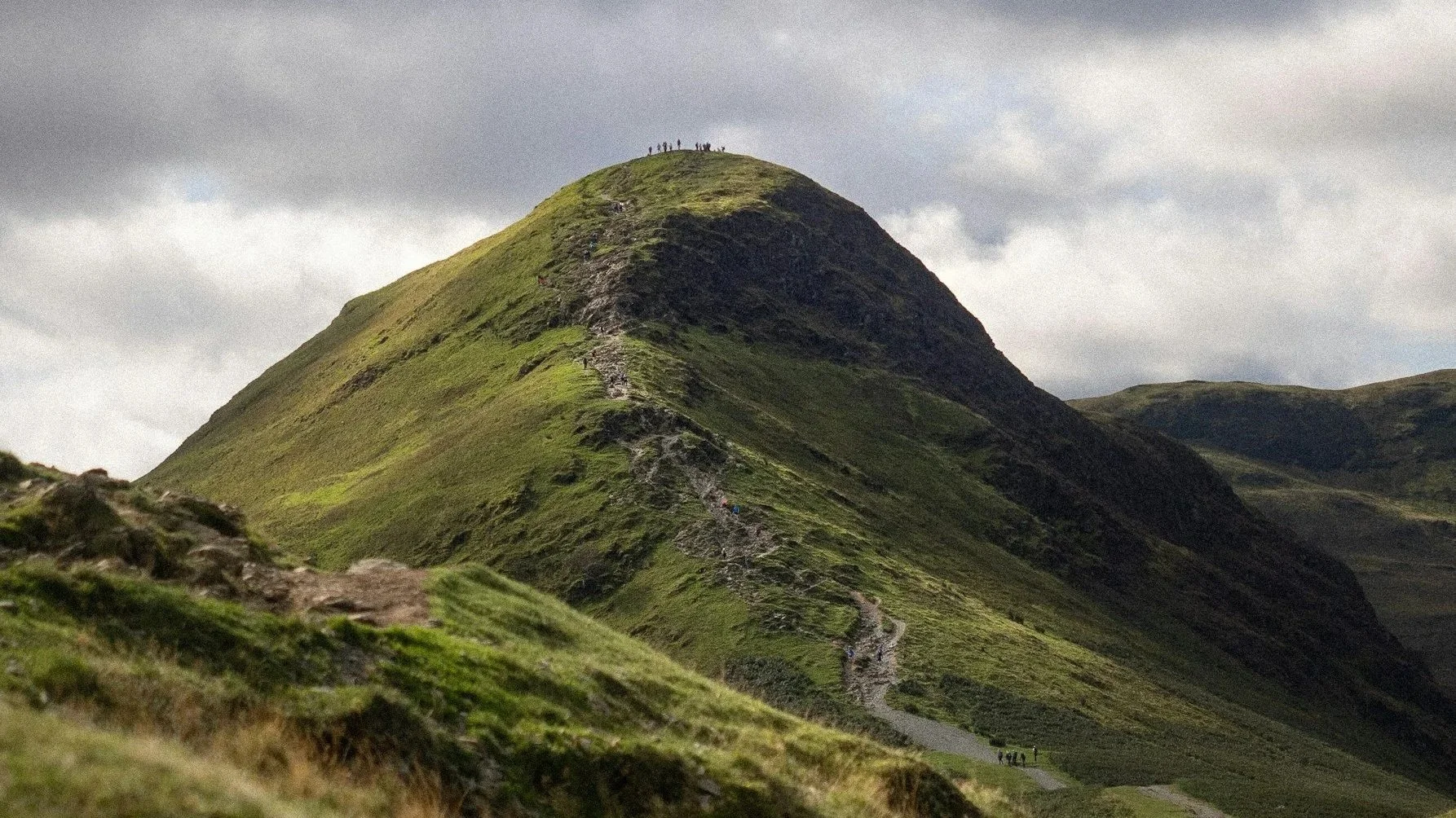
She pointed to the hill that rose behind the village. It had a soft, green back; the look of something slumbering.
“You must climb it,” she said. “And lure the Hare.”
“The Hare?” they asked.
“Yes,” she said. “Beneath the hill lives a hare who remembers the first stories and can open your hearing again. You must go to the hill and make an offering. A story of your own—a true one, but not factual. A story that has teeth. If the Hare accepts your offering, she will visit you one night under the moonlight and open your ears again.”
So, one by one, the villagers climbed the hill and sat quietly listening for the true story waiting inside them.
Some brought stories about heartbreak. Some about laughter and the joys of their lives. Some stories were nonsense—but sacred nonsense, with crooked wisdom tucked in the folds. Some of the stories were true. Some villagers only pretended.
And one night, the moon cracked open in brilliant, luminous array. The stars blinked as if remembering something and came closer. The Hare arrived. She visited many but not all. Only those who had offered something real. To each who had spoken true, the Hare offered their story back to them. And in the act of listening, their ears opened again. In that opening, they began to hear the hum of the world again: the roots speaking in the dark, the river singing under its breath, the land alive with voices they had thought were gone.
And so, the people remembered: When you speak with soul, the world listens. And when you listen with soul, the world speaks.
It is easy to set off on a journey. It’s much harder to be prepared for the journey and the exacting toll it may require. The villagers in this story sense something is amiss. Something has gone wrong, and the world is drained of its color. Their journey is less physical than an arduous voyage across mountains and sea, but it starts with difficulty nonetheless. A swallowing of pride to find the eccentric woman at the edge of things (is she ostracized? Outcast? Or just reclusive?) and ask for help. Her help comes with the oddest price — truth. The truth in our bones. The knowing that the only way to lure that which is precious and restorative is through the telling of the truth. It is in this telling, however, that our ears are open and we can hear yet again. The two go hand in hand.
On pilgrimage, we are often faced with the truths we must say out loud. We can go no further until we give voice to the aches within us — those small voices that say, “speak this, and you will move towards freedom.”
At the outset of Pilgrim Venture, I ask myself the same question that the villagers needed to answer. What is true and needs to be spoken so that I can hear again? Not all of the villagers had the courage to summon up the strength in their bones and let it fall out of their mouths. Might I? Might you? That is how we start a journey as pilgrims.
What story might you tell the Hare?
